Key points
- Sewage sludge digested without air gives biogas, which is mostly methane. A gas engine can burn it to make electricity.
- Indian cities already do this. Chennai's Kodungaiyur STP, Delhi Jal Board plants and Surat's STPs run engines on sewage gas.
- One cubic metre of typical biogas holds about 6 kWh of energy. A gas engine turns roughly a third of that into electricity.
- Results depend on steady sludge feeding, a warm digester and clean, dry gas.
Why a sewage treatment plant can make its own power
A sewage treatment plant (STP) is one of the largest electricity users in a city's water system. Aeration blowers, pumps and sludge handling run around the clock. At the same time, the plant pulls a large amount of organic matter out of the sewage, and that organic matter is stored energy.
When the settled sludge is kept in a closed tank without oxygen, bacteria break part of it down and release biogas. Burn that gas in an engine coupled to an alternator, and the plant gets electricity. The engine's waste heat can also keep the digester warm, which helps the bacteria work.
The International Energy Agency describes biogas as a mixture of methane, CO₂ and small amounts of other gases, produced by anaerobic digestion of organic matter. Its methane content typically ranges from 45% to 75% by volume. The methane is the part that burns.
From sludge to electricity: the six stages
- Sludge collection. Settled solids from the primary clarifiers and surplus sludge from the biological stage are collected and thickened so the digester is not filled with water.
- Anaerobic digestion. The sludge is held in a closed digester, usually warm (the mesophilic range, around 35 °C) and mixed, for several weeks. Bacteria convert part of the organic solids into biogas.
- Gas storage. A gas holder or membrane balloon stores the gas. Digesters do not produce gas at a perfectly even rate, and the engine needs a steady supply.
- Gas cleaning. Sewage gas is wet and contains hydrogen sulphide (H₂S). It often also contains siloxanes from soaps and cosmetics. These are removed before the engine (see our guide to biogas cleaning).
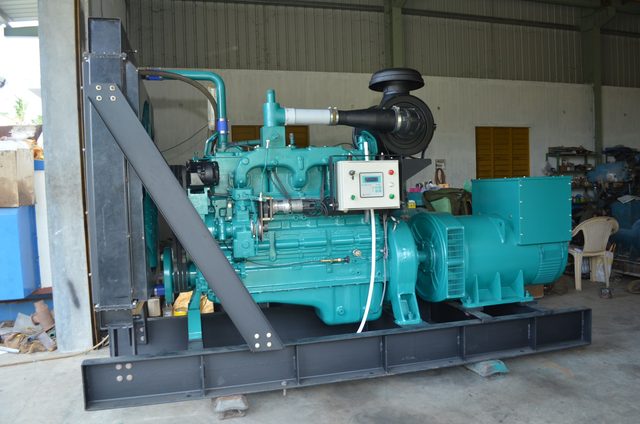
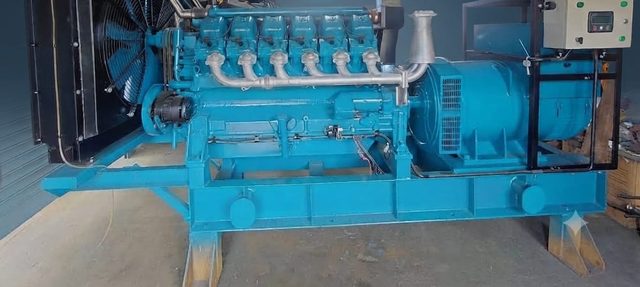
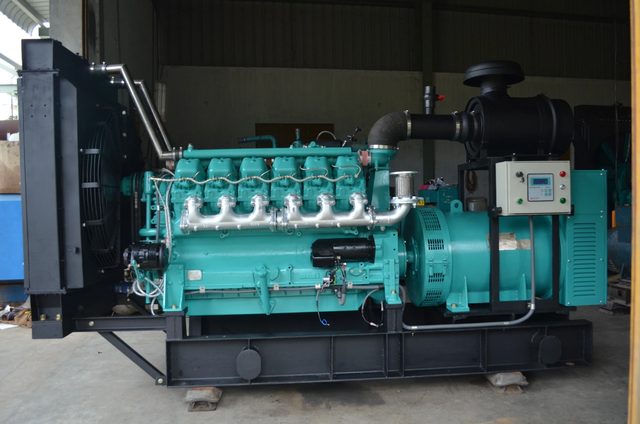
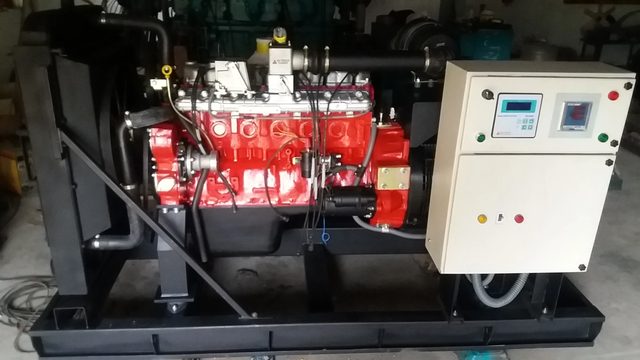
- Power generation. A gas engine drives an alternator. The electricity is used inside the STP, and the heat from the engine's jacket water and exhaust can warm the digester.
- Digested sludge. What leaves the digester is more stable, smells less and has less volume. It is then dewatered for disposal or permitted use.
UASB reactor or activated sludge with a digester?
Indian STPs reach biogas in two common ways.
| UASB reactor | Activated sludge + sludge digester | |
|---|---|---|
| Where the gas comes from | The raw sewage itself is treated without air, and gas is collected at the top of the reactor | Only the sludge is digested, in a separate closed tank |
| Treatment quality | Needs a second, aerobic stage. On its own, UASB brings BOD down only to about 70–100 mg/l | The aerobic stage does the main treatment |
| Indian example | Several plants built under river-cleaning programmes | Chennai, Kodungaiyur STP |
Many small and medium STPs use extended aeration, SBR or MBBR processes without a separate digester. Extended aeration oxidises much of the sludge in the aeration tank itself, so there is little left to make gas. Those plants usually need a process change, or extra wet waste added, before power generation makes sense.
Real examples from India
| Plant | City | What has been reported | Source |
|---|---|---|---|
| Kodungaiyur STP (110 MLD) | Chennai | A 1.064 MW sewage-gas engine running since 2006; 55 GWh generated and 100,000 operating hours by 2020; up to 98% of the plant's electricity needs, as reported by the supplier | Clarke Energy, 2020 |
| Kondli STP (45 MGD) | Delhi | About 10,000 kWh a day from biogas when generation started. Okhla made about 12,000 and Rithala about 20,000 kWh a day. Biogas covered 30–35% of these plants' power demand | The Tribune, 2015 |
| Anjana, Singanpore, Karanj, Bhatar STPs | Surat | Sewage-gas power plants of 0.5–1 MWe each, the first commissioned in 2003; the city later reported about 4.6 MW across its biogas plants | Surat Municipal Corporation; ICRIER; UNCRD |
These are figures reported by operators, suppliers and the press at the time. Today's output at each plant may be different.
How much electricity can an STP make?
Work it out in three steps.
- Gas from sludge. A European water-sector factsheet gives about 0.18–0.30 m³ of methane per kg of volatile solids (VS) fed. Primary sludge sits at the high end and surplus biological sludge at the low end.
- Energy in the gas. Methane holds about 36 MJ per m³, close to 10 kWh. Biogas at 60% methane therefore holds about 6 kWh per m³.
- Electricity from the engine. Gas engines turn roughly 30–42% of that energy into electricity, and the rest becomes heat. That gives about 1.5–2.5 kWh of electricity per m³ of biogas.
Example: a digester making 1,000 m³ of biogas a day, at about 2 kWh per m³, gives around 2,000 kWh a day. That is roughly an 85 kW engine running round the clock.
The Delhi figures give a real-world check. Kondli treats about 205 MLD (45 million imperial gallons a day) and reported 10,000 kWh a day, which is about 50 kWh per MLD per day. Plants with primary settling, warm digesters and good gas handling get more. Plants that lose gas to leaks, flaring or engine downtime get less. Our biogas-to-electricity calculation guide walks through the sizing maths in detail.
What makes sewage-gas projects succeed or fail
- Steady feeding and mixing. Digesters dislike sudden changes. Feed thickened sludge regularly and keep the tank mixed so no dead zones form.
- Temperature. Bacteria slow down when the digester cools. Using engine heat to warm the sludge keeps gas output steady.
- Clean, dry gas. H₂S turns into acid when burned, and siloxanes leave hard deposits. Both shorten engine life. Follow the gas-quality limits your engine maker sets.
- Measure everything. Gas flow, methane percentage, H₂S and engine hours show problems early.
- A safety flare. When the engine is stopped, surplus gas must be burned in a flare, never released. Methane is a strong greenhouse gas.
- Trained operators. A digester and engine need daily checks, logbooks and planned maintenance. Equipment alone does not keep the gas flowing.
The same idea works beyond sewage
Any wet organic waste can go through anaerobic digestion: food waste, vegetable market waste, poultry litter, starch-factory effluent and agricultural residues. Industries with their own wet waste, like sago and starch units and poultry farms, can run the same process on site. Adding food or other wet waste to a sewage digester (co-digestion) is also a common way to raise gas output.
Frequently asked questions
Can a small STP generate electricity?
It depends on the process. Small plants using extended aeration produce little digestible sludge, so there is little gas. Plants with primary settling and a separate anaerobic digester, or with UASB reactors, produce usable biogas. Adding other wet waste such as food waste (co-digestion) can raise gas output.
How much electricity does 1 m³ of sewage biogas give?
At about 60% methane, 1 m³ of biogas holds roughly 6 kWh of energy. A gas engine turns about 30–42% of it into electricity, so expect roughly 1.5–2.5 kWh per m³.
Can biogas run the whole sewage treatment plant?
Sometimes most of it. Chennai's Kodungaiyur STP is reported to meet up to 98% of its electricity needs from sewage gas, while Delhi Jal Board reported 30–35% at its plants. It depends on the sludge, the digester and the engine's running hours.
What happens to the gas when the engine is stopped?
It is stored in the gas holder, and the surplus is burned in a safety flare. It should never be released, because methane is a strong greenhouse gas.
Is electricity from sewage biogas renewable energy?
Yes. Biogas comes from organic waste that is produced every day, and India counts bioenergy, including waste to energy, in its renewable capacity.
Sources
- CPCB 2021 STP inventory, reported in a Rajya Sabha reply
- Down To Earth: India's STPs treat only a third of sewage generated daily (CPCB)
- IEA: An introduction to biogas and biomethane
- Clarke Energy: 55 GWh of renewable power generated at Kodungaiyur STP (2020)
- The Tribune: DJB starts generating biogas power at Kondli plant (2015)
- Surat Municipal Corporation: Bio gas based power plant
- ICRIER presentation: Surat sewage-gas power plants
- UNCRD: Surat city report (7th 3R Forum)
- UN-CSAM: UASB technology — expectations and reality
- Water Europe: Factsheet — anaerobic digestion
- Methane lower calorific value (36 MJ/m³), MEMF journal 2019
- Biogas CHP electrical efficiency — Energy Conversion and Management: X (2022)
Figures are as published in the sources above. Plant results vary with the waste, the design and how the plant is run. Last reviewed 17-10-2026.